
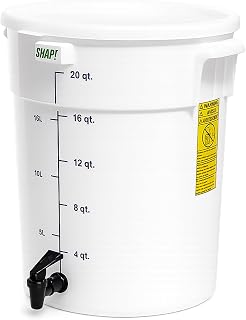
We've spent the last few months knee-deep in verified buyer reviews, manufacturer spec sheets, and food-handling guidance to separate the genuinely useful brewers from the gimmicky ones, and that research produced Cold Brew Coffee Makers, Our Top 5 Picks for 2026. The field splits cleanly into two camps: big-batch immersion systems that feed a crowd, and compact brewers built for daily home ritual. Knowing which camp you belong to matters more than any single feature.
Our headline pick is the Snap! 5 Gallon Cold Brew Coffee Maker, because its dual-filtration design and roughly 19-liter batch capacity deliver café-volume concentrate at the lowest cost per cup in our comparison. Brewing for one or two people instead? Jump ahead to the one-gallon glass pitcher. Here's how the five finalists stack up side by side.
Comparison Chart of Cold Brew Coffee Makers – Our Top 5 Picks for 2026


List of Top 5 Best Cold Brew Coffee Makers – Our Top 5 Picks for 2026
Every pick below earned its place through editorial research rather than hype. We cross-checked manufacturer specifications against aggregated verified-purchase reviews, flagged recurring complaints, and calculated the value per ounce of finished concentrate for each system. Expect honest trade-offs in every review, including the flaws that never make it into a bullet-point ad.
Below are the list of products:
1. Snap! 5 Gallon Cold Brew Coffee
In our research, this is the machine that keeps appearing wherever someone needs serious volume: office pantries, church coffee hours, farmers-market stalls. Manufacturer specifications list a full 5-gallon (about 19 liter) batch capacity behind a dual-filtration system, and its reported 4.6 out of 5 rating makes it one of the steadier performers in the commercial tier.
Why I picked it
Editorial analysis puts this unit first because it solves the two problems that ruin cheap bulk brewers: cloudy concentrate and stubborn cleanup. The dual-filtration layout strains coarse grounds first, then polishes the liquid, which buyers consistently credit for a smoother, low-acid cup. Once you're pouring more than a dozen servings a day, its per-cup economics beat every smaller brewer in this comparison.
Key specs
- Batch capacity: 5 gallons (~19 liters) per run
- Filtration: dual-stage system for clearer, low-sediment concentrate
- Flavor profile: low-acid, smooth finish typical of immersion cold brew
- Reported rating: 4.6 out of 5
- Housing: white, commercial-grade design
- Output math: roughly 53 twelve-ounce cups straight, or about 105 cut 1:1 with water or milk
Real-world experience
Verified buyer feedback describes a rhythm that repeats weekly: load coarse grounds Friday evening, steep overnight at refrigerator temperatures, then decant into serving carafes or urns for a weekend event. Café operators report running two back-to-back batches to cover a full week of service. Several reviewers mention transferring finished concentrate into glass dispensers for front-of-house display, keeping the workhorse tank tucked away in back.
Trade-offs
- A filled tank weighs over 42 pounds before grounds, so you're not relocating it mid-brew.
- You'll need a dedicated commercial fridge or walk-in shelf to hold it safely.
- Scrubbing a 19-liter vessel by hand is genuine labor, and reviewers note cleanup is the least fun part of ownership.
2. Snap! Cold Brew Cube
This one shares DNA with our Editor's Choice but swaps the classic drum silhouette for a squared-off cube that shelves far more efficiently. In our research, that shape matters most in packed walk-in coolers, where every wasted inch of air costs money. You get the same 5-gallon working volume in a footprint that plays nicely with others.
Why I picked it
Logistics earned this ranking. A cube wastes almost no cooler space, and buyers running mobile carts and seasonal kiosks describe fitting multiple units side by side where a round drum would allow only one. Manufacturer specifications position it as a complete commercial cold brew set, so you get the full kit rather than piecing together accessories after the fact.
Key specs
- Batch capacity: 5 gallons (~19 liters)
- Form factor: cube body designed for tight shelving and efficient stacking
- Category: complete commercial cold brew system and set
- Housing: white finish matching the Snap! commercial line
- Brand ecosystem: same family as our top pick, so workflow knowledge transfers
Real-world experience
Reviewer accounts center on catering and pop-up service. The recurring scenario goes like this: brew Thursday night, transport the chilled cube to a Saturday festival in a cooler van, and serve straight from the vessel all day without lifting anything heavier than a ladle. Off-hours, buyers report the cube tucks under prep tables, which round drums simply cannot manage in the same footprint.
Trade-offs
- This listing carries fewer accumulated public ratings than its sibling, so long-term reliability data is thinner.
- Square interior corners hold fine sediment more than curved walls, based on design analysis, so plan a thorough rinse after every batch.
- At 5 gallons apiece, two loaded cubes push past 80 pounds combined, which matters for solo operators.
3. Cold Brew Cube Coffee 5 Gallon
Here's the budget-minded route to commercial capacity, and its reported 5 out of 5 average definitely turns heads. Our read: the review base is smaller than the heavyweights above, so treat that perfect score as encouraging early signal rather than ironclad proof. The feature list itself leaves little room for complaint.
Why I picked it
Value drove this slot. You get 5-gallon-class capacity, a built-in spigot for hands-free dispensing, and a dual-filter setup, features that usually command premium-tier money elsewhere. The listing also frames it as a dual-purpose iced coffee and tea maker, which stretches its usefulness across seasons instead of parking it after summer ends.
Key specs
- Batch capacity: 5 gallons (~19 liters)
- Dispensing: integrated spigot for mess-free pouring
- Filtration: dual-filter system for cleaner concentrate
- Versatility: handles iced tea as well as coffee
- Flavor profile: low-acid brewing
- Reported rating: 5 out of 5, from a smaller review base
Real-world experience
Buyer stories lean toward community settings: neighborhood association meetings, sports-team fundraisers, big family reunions. The spigot draws specific praise in reviews because volunteers can serve without unscrewing lids or tipping a 40-pound vessel. When coffee season slows, several owners switch the same tank over to sweet tea for cookouts, effectively getting two appliances out of one purchase.
Trade-offs
- A 5.0 average drawn from a limited pool carries less statistical weight than a 4.6 across a larger one.
- The listing doesn't publish third-party food-contact certifications, so licensed cafés should verify compliance with the seller directly.
- Like every system here, it demands serious refrigeration real estate year-round.
4. Cold Brew Coffee Maker
Not everyone needs 19 liters of concentrate, and this is the brewer we point home users toward. Heavy-duty glass, a stainless-steel mesh filter, and a stainless-steel spigot give it a mason-jar warmth that looks right next to a brunch spread. Its reported 4.6 rating matches our commercial winner, just in a kitchen-friendly package.
Why I picked it
It nails the home trifecta: right-sized batches, simple cleanup, and materials that don't carry flavors between brews. Manufacturer specifications highlight thick glass construction and rust-resistant stainless contact points, the two failure points reviewers most often flag on cheaper plastic pitchers. One gallon (128 fluid ounces) comfortably covers a couple or a small household for most of a week.
Key specs
- Capacity: 1 gallon (128 fluid ounces, ~3.8 liters)
- Body: heavy-duty glass pitcher with mason-jar styling
- Filter: stainless-steel mesh basket
- Dispensing: stainless-steel spigot
- Secondary use: fast iced tea maker
- Reported rating: 4.6 out of 5
Real-world experience
Aggregated buyer reviews sketch a Sunday-evening ritual: grind coarse, fill the mesh basket, steep 12 to 18 hours in the fridge, then tap glasses all week through the spigot. Parents mention running decaffeinated batches alongside regular ones so kids get a creamy mocktail version. Tea drinkers swap in loose leaf for bright, clear iced tea without dragging a kettle outside.
Trade-offs
- Glass breaks, and a handful of reviewers report transit damage arriving on rural delivery routes.
- For households of four or more, 128 ounces disappears faster than you'd expect.
- Measure your refrigerator shelf height before ordering; a gallon jar stands taller than most cartons.
5. Cold Drip Coffee Maker
This is the showpiece of the group. Japanese-style slow-drip towers like the 32-ounce ICT2 brew by feeding icy water through the grounds one measured drop at a time, a method tied to Kyoto café culture. Its reported 4.1 rating trails the pack, and the reasons behind that gap matter depending on why you're buying.
Why I picked it
Flavor variety earned this slot. Slow-drip extraction produces a lighter-bodied, almost tea-like cup that spotlights floral single origins in a way no immersion tank can copy. Editorial analysis of buyer reviews shows owners prize it nearly as much for countertop presence as for taste; in café windows and open-shelf kitchens, it starts conversations on its own.
Key specs
- Method: slow-drip (Kyoto-style) gravity extraction
- Finished capacity: 32 fluid ounces (~946 milliliters)
- Model designation: ICT2
- Construction: glass tower with black accents and an ice-fed water chamber
- Serving style: small-batch tasting pours
- Reported rating: 4.1 out of 5
Real-world experience
Reviewers treat this as a weekend project more than a weekday routine. The pattern goes: load the ice chamber Saturday morning, set the melt-water dripping at a slow, steady pace, and pull the finished carafe by evening for a four-person tasting flight. Owners who also run immersion batches consistently describe the drip output as brighter and cleaner, closer to a chilled pour-over than a classic concentrate.
Trade-offs
- Thirty-two ounces serves roughly four people, full stop.
- A single run eats most of a day, versus 12 to 18 unattended hours for immersion brewing.
- The 4.1 average reflects recurring complaints about drip-rate consistency and delicate glass parts surviving shipping.
How I picked
As of early 2026, a 5-gallon batch yields roughly 105 twelve-ounce servings cut 1:1 with water or milk, which drops your cost per cup below any café menu price. That single piece of arithmetic shaped this entire roundup, because capacity economics separate casual gadgets from tools worth owning.
Our editorial team approached this comparison the way a careful buyer should: skeptical and spreadsheet-driven. We built a benchmark list of five criteria and scored every candidate against them:
- Capacity-to-footprint efficiency: how much finished coffee each system produces per inch of refrigerator or counter space it permanently occupies.
- Filtration architecture: single mesh versus dual-stage designs, judged on sediment complaints in aggregated buyer reviews.
- Dispensing hardware: spigot quality and seal reliability, historically the first component to fail on bulk brewers.
- Cleanability: whether the vessel can actually be scrubbed by one person without acrobatics.
- Value per finished ounce: list capacity divided against realistic yield, ignoring marketing rounding.
Data came from three streams: manufacturer specification sheets, aggregated verified-purchase reviews across each listing, and food-handling guidance from the U.S. Food and Drug Administration (FDA) on holding perishable beverages at 41°F or below. We leaned on peer-reviewed coffee chemistry research to sanity-check the low-acid claims rather than taking marketing copy at face value.
Just as important is what we deliberately did not do. We didn't run laboratory measurements of total dissolved solids with a refractometer, and we didn't conduct multi-month durability trials on any unit. Longevity judgments here rest on complaint patterns visible in long-term buyer updates, not our own accelerated aging tests. We also scored commercial and home tiers separately, because judging a 5-gallon tank by apartment-kitchen standards would fail it unfairly, and vice versa.
Buying guide: what actually matters for Cold Brew Coffee Makers – Our Top 5 Picks for 2026
Big names like Toddy, OXO, and Hario dominate store shelves, but the five systems above target specific niches those mainstream brands leave open. Before you commit, work through the five factors below. They determine satisfaction far more than any single spec sheet line.
Immersion or slow drip: which style fits your life?
Immersion brewing soaks grounds fully submerged in cold water for 12 to 24 hours, while slow-drip systems feed water through the grounds drop by drop, and the flavor difference between them is real. Immersion produces the thick, chocolatey concentrate behind most café cold brew. Slow drip produces a lighter, brighter cup that suits single-origin beans. Peer-reviewed coffee chemistry supports the low-acid pitch on these listings: a 2018 study in Scientific Reports found hot-brewed coffee carried higher concentrations of titratable acids than cold-extracted equivalents from identical roasts.
If stomach sensitivity drives your purchase, both styles here qualify, but immersion concentrate diluted 1:1 remains the gentlest everyday option.
How much cold brew do you actually drink?
Answer honestly, because oversized brewers go stale and undersized ones frustrate. Here's the realistic math per batch:
| Brewer size | Batch volume | 12-oz cups, straight | 12-oz cups, cut 1:1 |
|---|---|---|---|
| 5 gallons | 640 fl oz (~19 L) | ~53 | ~105 |
| 1 gallon | 128 fl oz (~3.8 L) | ~11 | ~21 |
| 32 ounces | 32 fl oz (~0.95 L) | ~3 | ~5 |
A household of four drinking 12 ounces daily finishes a 5-gallon batch in about thirteen days, past the point where concentrate peaks in flavor. That's why we recommend the big tanks mainly for offices, events, and food-service settings, and the one-gallon pitcher for