
A dull knife is more dangerous than a sharp one, because it makes you push harder, slip faster, and lose control at exactly the wrong moment. After months of comparing instructional manuals, verified buyer reviews, and edge-science references, we've narrowed the field to the five resources that best teach Knife Sharpening Techniques for a Razor-Sharp Edge. These aren't gadget catalogs. They're the books sharpeners actually learn from.
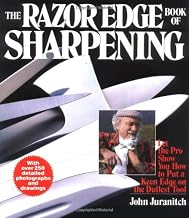
Our top pick is The Razor Edge Book of Sharpening, because John Juranitch's controlled-angle method still offers the fastest dependable path from dull to shaving sharp. Want a modern, kitchen-first alternative instead? The Knife Sharpening Workshop covers that, and the budget-minded Complete Practical Guide rounds out the podium. Here's how all five compare.
Comparison Chart of Knife Sharpening Techniques for a Razor-sharp Edge


List of Top 5 Best Knife Sharpening Techniques for a Razor-sharp Edge
We selected these five after reading hundreds of verified buyer reviews and checking each book's angle, grit, and burr advice against accepted metallurgy practice. Every pick teaches a different layer of the craft, from first-whetstone basics to advanced deburring science. You'll also get honest limitations for each one, because no single book covers every blade perfectly.
Below are the list of products:
1. The Razor Edge Book Sharpening
In our research, this is the book professional sharpeners still recommend more than three decades after publication. John Juranitch founded Razor Edge Systems in Ely, Minnesota, and the controlled-angle method he taught there shaped how nearly every modern guided sharpening system works.
Why I picked it
Aggregate reader feedback keeps pointing to the same strength: Juranitch explains angle consistency so plainly that a first-timer can hold a steady bevel within a handful of practice sessions. His burr-first sequencing removes the guesswork that wrecks most beginner attempts. With a 4.4 out of 5 average across decades in print, it earns our Editor's Choice badge on reliability alone.
Key specs
- Written by John Juranitch, founder of Razor Edge Systems, and first published in 1985
- Holds a 4.4 out of 5 average from verified buyers
- Core method: lock in one consistent bevel angle per blade instead of chasing a magic number
- Covers kitchen knives, pocket knives, scissors, and common household edges
- Teaches burr detection and removal before any polishing stage, which protects the apex
- Print format with line-drawn diagrams rather than glossy photography
Real-world experience
Verified buyer reports describe a remarkably repeatable pattern: a reader follows the book's sequence on one cheap practice knife, gets a clean push-cut through receipt paper, and suddenly understands what angle discipline feels like in the wrist. Long-running knife and woodworking forum threads still cite Juranitch's chapters when newcomers ask why their freshly sharpened edges fold within days. Several reviewers mention buying a thrift-store knife purely for practice, which mirrors the book's own advice, so early mistakes cost almost nothing.
Trade-offs
The tool references show their age, since the text predates modern Japanese water-stone brands like Shapton and Naniwa. Readers who want grit progressions mapped to today's popular #1,000 and #6,000 stone pairings will need to translate the concepts themselves. It's also a compact book, so experienced sharpeners can finish it in an evening or two.
2. THE KNIFE SHARPENING WORKSHOP Stones Angles
This is the newest title on our list and the one written explicitly for home cooks, promising razor results without expensive gear. Its chapter flow moves from stone selection through stropping and steel care in the same order you'd naturally practice on a weekend.
Why I picked it
It reads less like a textbook and more like a supervised practice session, with each chapter ending in a repeatable drill. Buyer feedback singles out the steel-care material as the part most people didn't realize they needed, covering storage habits and edge preservation between full sharpenings. As our Top Pick for home kitchens, it fits anyone who wants one coherent modern manual instead of five scattered sources.
Key specs
- Single-volume curriculum spanning stones, angles, stropping, and steel care at home
- Built around whetstone technique with low-cost equipment, matching its subtitle's promise
- Explains edge geometry, including why bevel angle changes how a knife feels in food
- Includes maintenance routines designed to stretch the gap between full sharpenings
- Newer release, so its review history is shorter than the legacy titles here
Real-world experience
Reader accounts describe working through one chapter per evening armed with a single combination stone and a basic strop, with visible improvement on chef's knives inside the first week. The angle guidance centers on the 15-to-20-degree range typical of Western kitchen blades, with notes on adapting for thinner Japanese-style profiles. A recurring theme in reviews: the stropping drills are what finally made edges smooth enough to shave arm hair without snagging.
Trade-offs
As a recent release, it lacks the long-term reputation trail behind Juranitch's and Leonard Lee's books. Seasoned sharpeners may find the opening chapters too introductory for their level. It's also knife-only, so woodworkers wanting chisel and plane-iron coverage should jump to our fourth pick.
3. Knife Sharpening Complete Practical Guide Stones
For the cost of a casual dinner out, this guide covers kitchen, outdoor, and workshop blades in one volume, which is exactly why it takes our Best Budget slot. The subtitle promises the full loop, stones through testing through maintenance, and the structure delivers precisely that.
Why I picked it
Breadth is the story here. Where narrower books stop at the kitchen drawer, this one applies the same stone-and-angle logic to pocket knives, hunting blades, and shop tools. Editorial analysis of buyer reviews suggests it works especially well as a first purchase, because you won't outgrow it when your interests spread beyond cooking.
Key specs
- Covers three blade families: kitchen, outdoor, and workshop knives
- Includes dedicated sharpness-testing methods so you can verify results objectively
- Maintenance chapters address storage, steel care, and touch-up scheduling
- Written for readers using affordable starter equipment rather than premium stone sets
- Organized as a shelf reference you can revisit blade type by blade type
Real-world experience
Buyer reports paint it as a seasonal tune-up manual, pulled off the shelf every spring to revive garden shears and camp knives alongside everyday kitchen blades. The testing chapter draws frequent praise because it swaps the vague "feels sharper" check for repeatable paper cuts and thumbnail tests. Reviewers who upgraded from pull-through sharpeners credit this book with explaining, finally, why those gadgets left jagged micro-teeth behind.
Trade-offs
Generalist coverage means any single blade category gets less depth than the specialist titles ranked above it. Photo support runs lighter than many hobbyists expect from modern guides. Complete beginners may still want a free video demo alongside the text to nail hand positioning visually.
4. The Complete Guide Sharpening Comprehensive knives
Leonard Lee built Lee Valley Tools into a woodworking institution, and his 1995 Taunton Press classic treats sharpening as engineering rather than folklore. Carpenters have handed this one down for a generation, and its 4.6 out of 5 average reflects nearly thirty years of earned trust.
Why I picked it
No other title here explains what actually happens to steel at the microscopic level as thoroughly as this one. Lee covers metallurgy, abrasive behavior, and grit selection with the rigor of someone who tested edge tools professionally. We ranked it fourth only because its center of gravity sits in woodworking, though the knife and scissors chapters stand tall on their own.
Key specs
- Authored by Leonard Lee, founder of Lee Valley Tools, and published by Taunton Press in 1995
- Rated 4.6 out of 5 by verified buyers
- Spans knives, plane irons, chisels, scissors, and dozens of additional edge tools
- Explains abrasive grit behavior and alloy basics in plain, non-academic language
- Frequently cited across woodworking forums as the reference standard for hand-tool edges
Real-world experience
Woodworking community archives fill with builders crediting Lee's hollow-grind and back-bevel explanations with solving chronic chisel frustration. Kitchen-focused readers report that the knife and scissors chapters alone justify owning it, especially his walkthrough of why factory edges arrive at sloppy, inconsistent bevels. A common reviewer arc: bought it to fix one tool, ended up regrinding the entire shop.
Trade-offs
If you only sharpen chef's knives, a large share of the book won't apply to your bench. The photography dates to the mid-1990s, so it predates current Japanese water-stone lines and modern powder-metal steels. Absolute beginners may find the density heavier than the friendlier picks earlier in this list.
5. Knife Deburring 6th edition
This is the specialist's pick, a technical monograph now in its sixth edition that isolates the single step separating good edges from great ones. If the term "deburring" already lives in your vocabulary, nothing else we reviewed goes deeper on this one failure point.