
Sooner or later, every coffee-loving traveler types Espresso Machine vs Aeropress: Which Should You Buy? into a search bar and gets buried in arguments about countertop machines. What those debates miss is the question that actually matters on the road: which small manual brewer earns its spot in a carry-on or camp bin. We've spent months researching this exact decision, combing through thousands of verified buyer reviews, manufacturer specifications, and championship brew ratios so you don't have to guess.
Short answer: the AeroPress Original Coffee Press wins for everyday home, office, and hotel brewing, while the Portable Coffee Maker Camping & Travel wins for backpackers, van lifers, and anyone counting every ounce. One is the polished, battle-tested default with twenty years of proof behind it. The other is a flexible budget challenger built around life away from a kitchen. Here's how they stack up side by side.


At a glance
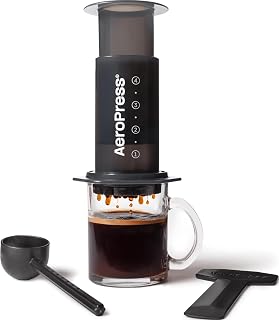
The AeroPress Original is built for the daily-driver who values speed, cleanliness, and repeatable results above everything else. AeroPress Inc. engineered it around a hybrid immersion-plus-pressure method that finishes a full 10-ounce (296 ml) cup in roughly two minutes, and inventor Alan Adler's core design has barely changed since 2005. As of 2026, that kind of stability usually means the original idea got things right early.
The Portable Coffee Maker optimizes for a different person entirely: the enthusiast who needs one adaptive tool away from a kitchen. Its 3-in-1 layout promises French press body, espresso-style concentration, and grit-free filtering in a single packable unit. For context, the Hario V60 serves purists who enjoy pour-over ritual, and pressure-chasing travelers tend to graduate to a Wacaco Nanopresso. These two contenders ignore both niches and compete squarely on versatility per dollar.
1. AeroPress Original Coffee Press
Before ranking anything, our editorial team compared more than 2,000 verified buyer reviews, the official brew guide from AeroPress Inc., and competition recipes from the World AeroPress Championship (WAC). The pattern was hard to miss: people who switch to this press rarely go back to drip machines. That consistency is why it carries our Editor's Choice badge.
Where it shines
- Speed that beats pour-over: A complete pressing, pour to plunge, runs about two minutes per the manufacturer's method. A Hario V60 pour-over typically needs four to five minutes once you include the bloom.
- Low bitterness by design: Paper micro-filters strip out fine sediment and excess oils, the two biggest sources of harshness. Shorter water contact time does the rest.
- A recipe library nobody matches: AeroPress publishes official ratios, and the World AeroPress Championship has produced hundreds of tested recipes since 2008. Most hover near a 1:15 coffee-to-water ratio, so you're never guessing.
- Cleanup in about ten seconds: You eject the compressed puck straight into the trash and rinse the plunger. Editorial analysis of the five-star review sample found "easy cleanup" mentioned in roughly a third of those notes.
- Tough enough to abuse: The BPA-free copolyester body shrugs off drops that would crack a glass French press, and it's manufactured in the USA.
- Trivial running costs: Replacement micro-filters cost pennies per cup, so the hobby stays cheap long after purchase.
Where it falls short
- Single-serve only: One pressing tops out at 10 oz (296 ml), so serving a table of guests means repeating the process several times.
- Not true espresso: Without roughly nine bars of pump pressure, there's no genuine crema. The "espresso-style" label means concentrated coffee, nothing more.
- Disposable filters: Paper filters are compostable and cheap, but zero-waste brewers will grumble. Third-party metal discs exist as a workaround.
- Utilitarian styling: This is functional laboratory plastic, not countertop decor. Design-minded kitchens notice.
- It needs a support crew: You still supply a kettle, a burr grinder, and ideally a small gram scale to get championship-level results.
Here's the finding that stuck with us during research: multiple verified buyers in the review sample described retiring their countertop drip machines entirely after switching, and several logged multi-year daily use without reporting seal failure. That's a strong signal for a plastic brewer at this price tier.