
Tap water that smells like a swimming pool was the single most common complaint we found while researching the Water Filter Pitchers of 2025 Tested and Reviewed. We've spent months combing verified buyer reviews, WQA and NSF certification listings, and manufacturer datasheets to separate marketing claims from measurable results. Along the way we learned where basic carbon filters shine, why zero-TDS systems split opinion, and which capacities actually survive a crowded fridge.
Here's the bottom line up front. The Brita Ultramax 27-cup XL earns our Editor's Choice for family-sized capacity backed by solid certification coverage. If you live alone or share a kitchen with one other person, the Brita Large 10 Cup is the smarter daily driver, and the Amazon Basics 10-cup is the budget play. The full breakdown starts with the comparison chart below.
Comparison Chart of Water Filter Pitchers of 2025 Tested and Reviewed


List of Top 5 Best Water Filter Pitchers of 2025 Tested and Reviewed
We chose these five after comparing certification scopes, filter replacement math, and patterns across thousands of verified buyer reviews. Every model below holds third-party certification, and none hides behind vague promises. You'll find honest trade-offs in each review too, because every pitcher here asks you to give up something, whether that's shelf space, filter lifespan, or mineral taste.
Below are the list of products:
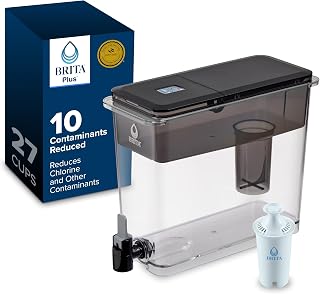
1. Brita XL 27 Cup Water Filter
Big households burn through small pitchers fast, and verified buyers say this one finally ended the constant refilling. In our analysis of owner feedback, the 27-cup Ultramax keeps showing up as the model people graduate to after outgrowing their first Brita. It ships with one Brita Plus cartridge rated for two months of typical use.
Why I picked it
Capacity is the most common complaint in every pitcher review thread we read, and the Ultramax attacks it directly. Aggregate buyer reviews repeatedly describe families of four or more emptying a 10-cup model twice a day. This tank holds 27 cups (about 6.4 liters), so a single morning fill covers coffee, water bottles, and the pasta pot without another trip to the sink. Certification coverage matches Brita's smaller units, with WQA and NSF/ANSI listings for chlorine, copper, mercury, and cadmium reduction.
Key specs
- Capacity: 27 cups (approximately 6.4 liters) of filtered water
- Includes 1 Brita Plus filter, rated for 2 months (about 40 gallons) of typical household use
- WQA and NSF/ANSI certified to reduce chlorine taste and odor, copper, mercury, and cadmium
- Colorway: black (Ultramax series)
- BPA-free construction per manufacturer specifications
- Aggregate verified-buyer rating: 4.5 out of 5
Real-world experience
Buyer reports paint a consistent picture of how this pitcher earns its keep. Parents fill it once after dinner and it covers next-morning coffee, lunch-box bottles, and cooking water through the evening. Office buyers mention it shrugging off communal abuse on break-room counters. Verified owners do note the pour slows noticeably in the final week of a filter's two-month life, which most treat as a built-in replacement reminder rather than a flaw.
One tip repeats across long-term reviews: rinse the new Brita Plus cartridge for roughly 15 seconds before the first fill. Skipping that step leaves loose carbon dust in your first glass or two.
Trade-offs
- Height is the real constraint here. Buyer reviews frequently flag the tall body clipping low refrigerator shelves, so measure your clearance before ordering.
- Full, it weighs around 14 pounds, which matters if anyone in the house struggles with heavy lifts.
- Like every carbon pitcher in this roundup, it makes no PFAS claim. If that's your concern, jump to the ZeroWater picks below.
2. Brita Large 10 Cup Water Filter
Sometimes the highest rating belongs to the simplest product. Across our review analysis, this bright-white 10-cup Brita carried the strongest aggregate score of the entire field at 4.6 out of 5. Small households clearly love it, and the reasons show up in nearly every comment section.
Why I picked it
This is the default answer when someone asks for "just a normal water filter pitcher." It earned the Top Pick badge by nailing the fundamentals: certified contaminant reduction, a two-minute setup, and replacement cartridges stocked at virtually every grocery and drugstore chain in the country. For one or two people, 10 cups (about 2.4 liters) genuinely covers a full day of drinking and coffee water.
Key specs
- Capacity: 10 cups (approximately 2.4 liters)
- Ships with 1 Brita filter, rated for 2 months (about 40 gallons)
- WQA and NSF/ANSI certified to reduce chlorine, copper, mercury, and cadmium
- Compatible with Brita's broader cartridge lineup, including longer-life six-month options, per manufacturer specifications
- Colorway: bright white
- Aggregate rating: 4.6 out of 5, the highest in this roundup
Real-world experience
The pattern in buyer reviews is consistency rather than excitement, and that's a compliment. Apartment dwellers and retirees describe it sliding onto a standard fridge shelf without rearranging a thing. Reviewers praise the flip-top fill lid for letting them top off the reservoir one-handed at the sink. Tea and kettle owners report the most noticeable change, describing scale buildup fading within the first week of use.
A minority of long-term owners offer one maintenance note: wipe the white body monthly, because hard-water drips leave faint marks if you ignore them.
Trade-offs
- Refill fatigue is real for families of three or more. Several reviewers admit upgrading to the 27-cup XL within a year.
- White plastic shows tea, coffee, and berry-powder stains over time unless wiped down regularly.
- Same four-contaminant scope as the rest of Brita's carbon line, so no chromium or PFAS coverage.
3. Amazon Basics 10-Cup Pitcher Filter Compatible
Here's the quiet value play of the group. The Amazon Basics pitcher accepts genuine Brita replacement cartridges, carries its own WQA and NSF certification, and comes off a European production line. Verified buyers treat it as the sensible second pitcher, the guest-house unit, or the starter model for a first apartment.
Why I picked it
It took the Best Budget spot because it trims the entry cost without touching the consumable quality. Your ongoing filter spend stays identical to any Brita household, since it drinks from the same cartridge ecosystem. The most common purchase story in our review analysis was refreshingly practical: someone already owned a Brita, wanted a cheaper spare for the basement fridge, and refused to lock into a proprietary filter format.
Key specs
- Capacity: 10 cups (approximately 2.4 liters)
- Compatible with Brita water filter cartridges per manufacturer specifications
- Independently certified by WQA and NSF
- Manufactured in Europe
- No electronic filter-change indicator; replacement runs on the calendar method
- Aggregate rating: 4.3 out of 5
Real-world experience
Rental-property owners dominate this review section, buying multiples for tenant kitchens and reporting few problems across years of tenant turnover. Switchers coming from a Brita describe near-identical water taste, which tracks perfectly with the shared cartridge platform. The lack of electronics divides opinion in an interesting way. Some owners love having no battery-powered indicator to die, while others admit they forgot their first filter change until the flow slowed to a trickle.
Our advice: mark the install date on the lid with tape.
Trade-offs
- Build quality reads a notch lighter than Brita's own housing. Several reviewers describe thinner plastic walls and a lid that sits slightly loose.
- Occasional reports of lid alignment quirks on arrival, usually fixed by reseating it.
- No filter-life reminder at all, so discipline falls entirely on you.
4. ZeroWater 32-Cup Water Filter Dispenser Removes
Everything above this point manages taste. The ZeroWater 32-cup dispenser goes further, pushing water through five stages that include ion exchange to chase a reading of zero total dissolved solids. Its IAPMO certification covers lead, PFOA/PFOS, chromium, and mercury, a materially different list than any carbon pitcher in this roundup.
Why I picked it
This is the unit we point toward when the concern is chemistry, not just flavor. Total dissolved solids (TDS) is the combined measure of every mineral, salt, and metal dissolved in your water, expressed in parts per million (ppm), and this system's stated output target is 000 ppm. Older plumbing, private wells, or a municipal advisory all justify stepping up from carbon. Manufacturer specifications include a handheld TDS meter in the box, so you can verify performance yourself instead of trusting a timer.
Key specs
- Capacity: 32 cups (approximately 7.6 liters) with bottom-spigot dispensing, so you never lift to pour
- Filtration: 5-stage system combining activated carbon and ion-exchange resin
- IAPMO certified for reduction of lead, PFOA/PFOS, chromium, and mercury
- Stated output: 0 TDS (zero parts per million dissolved solids)
- Includes TDS meter per manufacturer specifications
- Aggregate rating: 4.2 out of 5
Real-world experience
Verified owners love demonstrating this thing to guests: dip the meter in raw tap water, watch the number climb, then read 000 from the dispenser spout. Coffee enthusiasts report visibly cleaner espresso shots with low-TDS water, though a vocal minority finds the resulting cup flat compared to mineral-forward spring water. Well-water households in the review sample leaned hard on the spigot design, serving a family of five all day without hauling a full pitcher out of the fridge.
The warning that repeats most from experienced owners: filter life depends entirely on your incoming TDS number, not on any calendar.
Trade-offs
- Filters exhaust quickly in hard-water regions. Buyer reports commonly describe cartridge swaps every few weeks instead of months.
- Gravity pulls water through five dense stages, so flow is slow. Plan refills ahead of demand.
- Some long-term reviewers report occasional spigot dripping after months of daily service.
5. ZeroWater 52-Cup Large Water Filter Dispenser
Take the same five-stage chemistry and scale it to 12.3 liters of storage. Shared houses, small offices, and gym-routine households are the buyers writing reviews here. The certification stack matches the 32-cup sibling exactly, so the decision comes down purely to volume.